


Most founders know their spend visibility is broken, yet you are still stuck managing spreadsheets, Slack receipts and end-of-month card surprises. You lose hours reconciling transactions that happened weeks ago, while trying to make cash-flow decisions based on data that is already outdated.
Meanwhile, SaaS renewals slip through unnoticed, expense reports arrive late and most spend management tools feel either too basic for your needs or far too complex for your team…
But you do not need an enterprise system. All you need is clarity, speed and real-time visibility without the overhead.
This guide breaks down why spend visibility keeps failing startups and how to fix it before it affects your burn, runway and decision-making.
The hidden costs of poor financial visibility in growing startups
Most visibility issues come down to one simple truth: startups don’t see spend until long after it happens. But when expenses aren’t visible in real time:
- Budgets drift
- Cash flow forecasts become inaccurate
- Teams overspend without meaning to
- Small leaks turn into big, compounding losses
Typical approval workflows can stretch into weeks. Reconciliation often happens days before investor reporting. And because expenses live across multiple tools, finance teams end up stitching together fragmented data instead of using a single source of truth.
The result? Startups operate on historical financial information in a world that requires real-time insight. And even worse: many spend tools promise visibility but bury startups under enterprise features they don’t need.
Instead of solving the problem, they add more systems and more work. Visibility isn’t just about more software. it’s about removing friction.
Comparing top spend management platforms: features, pricing, and real-world performance
Not all spend management platforms tackle the same problems. Here’s how leading tools differ, and where their approaches fall short for early-stage companies.
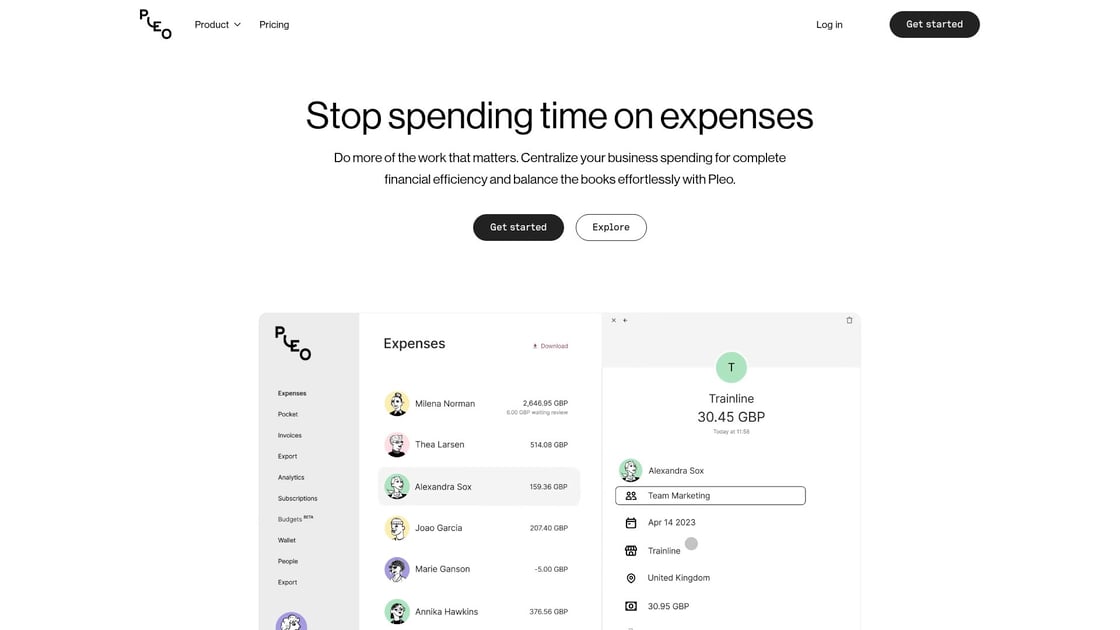
Pleo
Pleo is known for making expense management user-friendly, with over 1,400 five-star reviews.
Its strength is intuitive receipt capture and policy compliance for non-finance teams.
Where it shines:
- Automates receipt collection
- Simple UX that encourages team adoption
- Strong accounting integrations
But for startups needing tight, real-time spend controls, Pleo can feel more like an expense tool than a visibility engine.
Husk
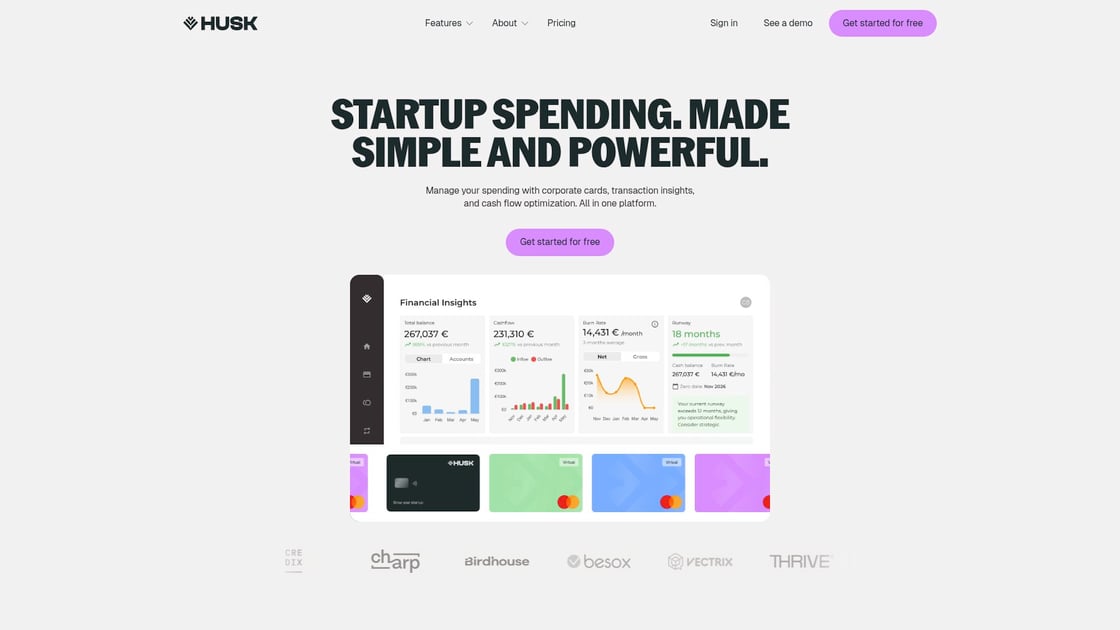
Husk is built for the realities of growing startups, not the needs of established enterprises.
It combines corporate cards with real-time insights, flexible controls, and cash-flow optimization designed specifically for small teams.
Why startups choose Husk:
- Receipts collection happens over WhatsApp
- Real-time transaction feeds replace end-of-month reconciliations
- A simple financial dashboard answers the questions founders panic about at 11pm
- Insights flag waste automatically, before it compounds
Instead of juggling spreadsheets and shared cards, teams get one clean view of every euro, the exact moment it moves.
Payhawk
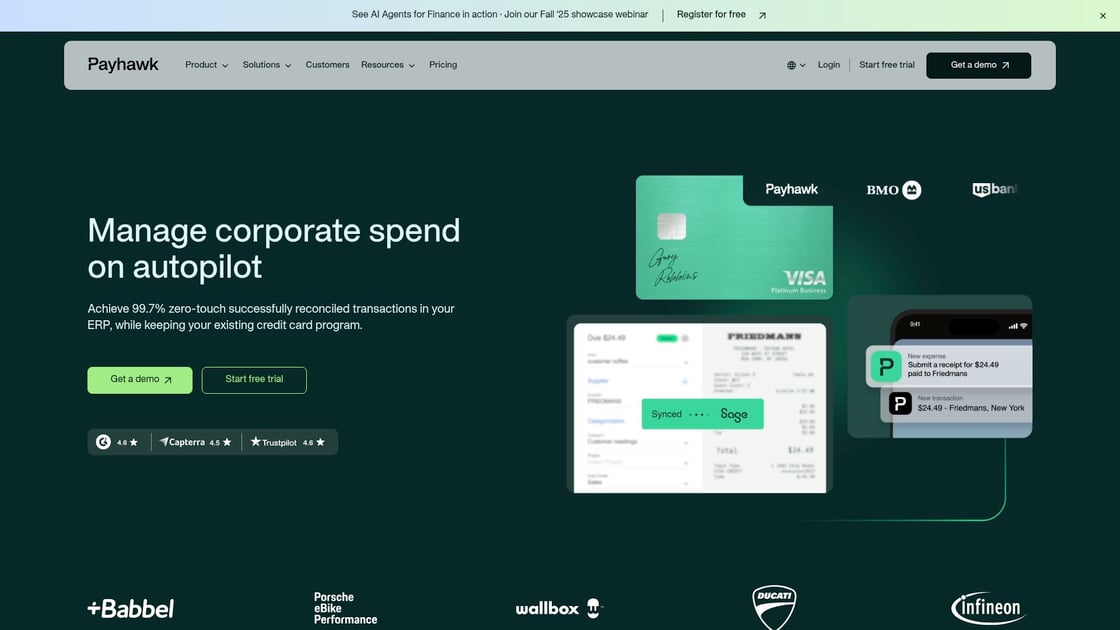
Payhawk appeals to companies preparing for audits, compliance, and ERP complexity.
Strongest features:
- Powerful integrations
- AI for invoice coding
- Flexible workflows
- Detailed audit trails
While excellent for later-stage companies, Payhawk’s enterprise orientation makes it more than most early-stage startups need (or want).
Taking action: transform visibility before your next funding round
Now, choosing the right platform is step one. Step two is eliminating the delays and manual work that keep your financial data stuck in the past.
Startups using Husk:
- End Friday reconciliation sessions entirely
- See every transaction instantly, instead of weekly
- Catch waste the moment it appears
- Regain control of budgets and burn
Investors are demanding stronger financial oversight earlier than ever. Real-time visibility isn’t a nice-to-have but the difference between confident decisions and runway drift.
If your startup is still operating on last month’s numbers, it’s time to fix that.